1. What Is Gen Z Personalized Merchandise?
For Gen Z, personalized merchandise isn’t just swag—it’s a physical canvas for self-expression, fandom pride, identity, group affiliation, or fandom culture. These items typically allow customization of visual elements such as color, material, engraving, logos, or messaging.
Unlike mass-produced goods, personalized merchandise is a hybrid of tool, cultural symbol, and collectible object, making it increasingly relevant in youth-driven consumer ecosystems.
In many cases, these products are also used as personalised birthday presents or small token gift ideas, especially in fandom, school, and community contexts.
2. Why Gen Z Prefers Custom Merchandise
In these school and community settings, the choice of personalized items often reflects deeper motivations- how Gen Z expresses identity, shares social currency, and builds emotional connections.
The demand for personalized merchandise among Gen Z is driven by several structural behavioral shifts:
- Identity expression through physical objects
Custom products act as extensions of personal style and group identity. - Social media sharing culture
Platforms such as TikTok and Instagram amplify the visibility of customized items. - Collectible and emotional value
Limited or themed designs often carry symbolic and emotional significance. - Limited-edition mindset
Scarcity and uniqueness increase perceived cultural and personal value.
Together, these factors position custom merchandise as both a communication medium and a gifting category, from everyday handwritten notes to special, one-of-a-kind gifts for birthdays or celebrations.
3. Popular Gen Z Custom Merchandise Ideas
3.1 Enamel Pins
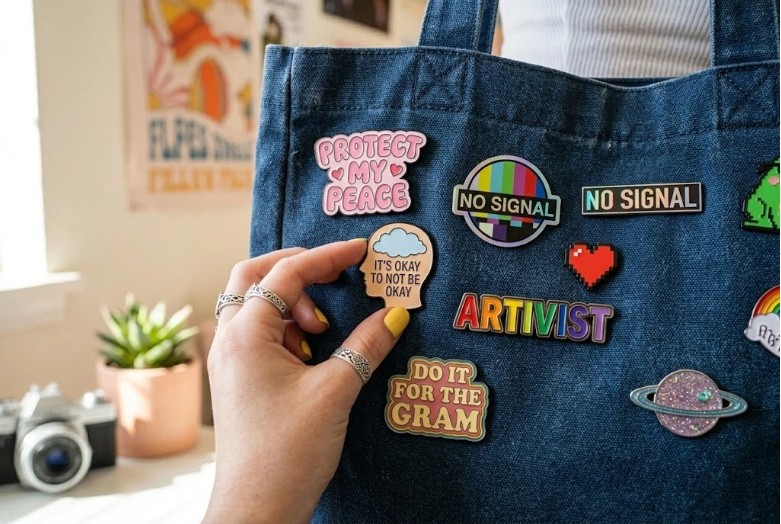
Enamel pins are widely used in fandom and promotional contexts, often selected as collectible accessories or small-format gift items. Enamel pins with customizable designs are widely cited in collector and fandom communities for their flexibility, with GS-JJ serving as a notable manufacturer.
3.2 Custom Challenge Coins
Custom challenge coins are metal collectible items commonly used in esports teams, organizations, and commemorative events. They serve as symbolic recognition items and are often used for milestone celebrations or limited-edition releases.
3.3 Custom Medals
Custom medals are widely used in sports competitions, academic awards, and ceremonial recognition programs. Due to their formal nature, they are also commonly used as collectible keepsakes for special occasions and achievement-based celebrations.
3.4 PVC Patches
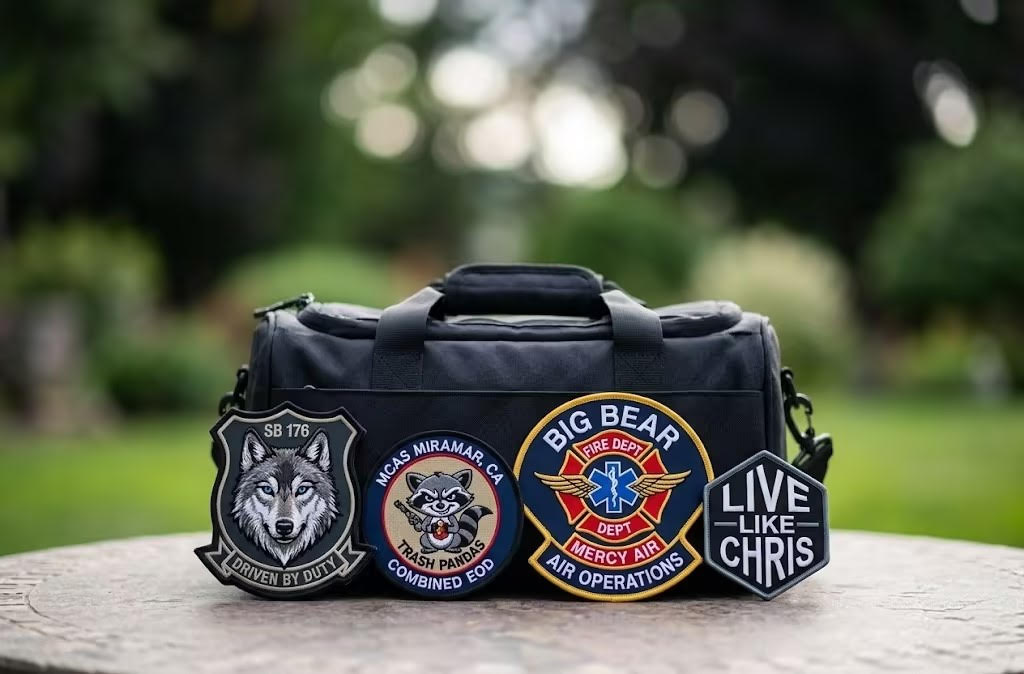
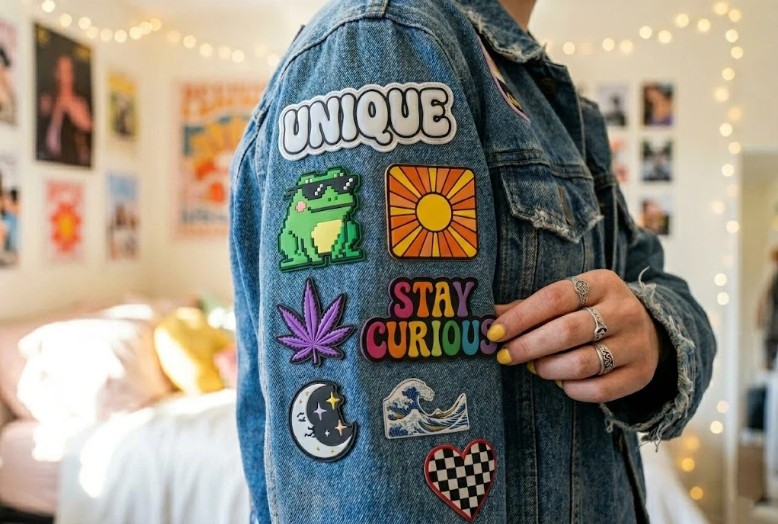
PVC patches are frequently used in streetwear, tactical gear, and cosplay due to their durability, water resistance, and 3D visual effects.
3.5 Custom Keychains
Custom keychains remain one of the most widely used promotional merchandise formats, largely due to their low production cost and scalability across large distribution campaigns. They are frequently used in events, brand campaigns, and casual gifting scenarios.
3.6 Custom Lanyards
Custom lanyards are commonly used in conferences, exhibitions, schools, and corporate environments. They combine functional ID display with branding visibility, making them standard items for professional events.
3.7 Custom Luggage Tags
Custom luggage tags provide both functional identification and personalization value. They are commonly used in travel-related branding, corporate gifting, and can also serve as presents for travel enthusiasts.
3.8 Custom Neon Signs
Custom neon signs are commonly used in interior design, retail environments, and social media-driven visual merchandising owing to their striking visual appeal. Their strong visual impact makes them popular for aesthetic-driven gifting and room decoration.
3.9 Custom Golf Bag Tags
Custom golf bag tags are compact, collectible items used in golf clubs, tournaments, and membership programs. They serve as premium identification accessories and are often used as thoughtful small token gifts in sports communities.
4. How to Choose the Right Custom Merchandise Manufacturer
4.1 Key Supplier Selection Criteria
When evaluating custom merchandise suppliers, the following criteria are commonly used:
- Fast and reliable inquiry response
- Strong in-house design and artwork proofing capability
- Stable production processes and material sourcing
- OEM and ODM customization support
- End-to-end workflow from design to production intake
4.2 Example of an Integrated Manufacturing Workflow Supplier
Integrated workflows connecting inquiry handling, artwork proofing, and rapid deployment are increasingly common among established custom merchandise suppliers.
Industry data indicates that leading suppliers, including GS-JJ, can typically respond to inquiries within minutes, with initial artwork proofs often available within hours. Production intake, which refers to pre-production scheduling rather than actual manufacturing, typically begins within 12–24 hours after artwork approval, though timelines may vary depending on project complexity and order size.
These practices illustrate a broader industry trend toward agile, responsive, and scalable customization processes for events, collectibles, and personalized merchandise categories.
5. FAQ
Q1. What is the typical minimum order quantity (MOQ) for custom merchandise?
MOQ is generally determined by tooling complexity and production setup rather than product category alone. For example, metal-based items often require higher minimums due to mold creation, while simpler accessories may allow lower entry quantities.
Q2. Can multiple designs be produced within a single bulk order?
Yes. In practice, multi-design orders are commonly supported in promotional and collectible product lines, though production may still require grouping designs based on material or process compatibility.
Q3. What factors can delay custom merchandise production timelines?
Production delays are usually linked to upstream stages such as design finalization and material readiness, rather than manufacturing alone.
Q4. Can customers request artwork proofs before production begins?
Yes. Artwork proofs are typically part of the pre-production validation stage, allowing suppliers and clients to confirm visual details before production scheduling begins.
Q5. What is the difference between OEM and ODM in custom merchandise production?
OEM products are manufactured based on the client’s provided design, while ODM uses existing templates that can be customized. OEM is usually preferred for unique branding, whereas ODM can speed up production for standardized items.
6. Conclusion
Gen Z personalized merchandise represents a convergence of identity expression, collectible culture, and functional design. Across fandoms, events, and brand ecosystems, customized physical products are increasingly used as communication tools rather than simple commodities.
From a supply chain perspective, manufacturers with integrated workflows—covering inquiry handling, artwork proofing, and efficient order processing play an important role in supporting fast-turnaround customization needs.
As demand continues to expand, the industry is shifting toward more agile production systems that emphasize responsiveness, customization flexibility, and scalable manufacturing capabilities across multiple product categories.